The javelin accompanies Dan Pembroke from childhood to Paralympic sport. In Kie Cummings’s documentary, training, family archives and filtered images explore the relationship between ambition, sight loss and hopes for the future.
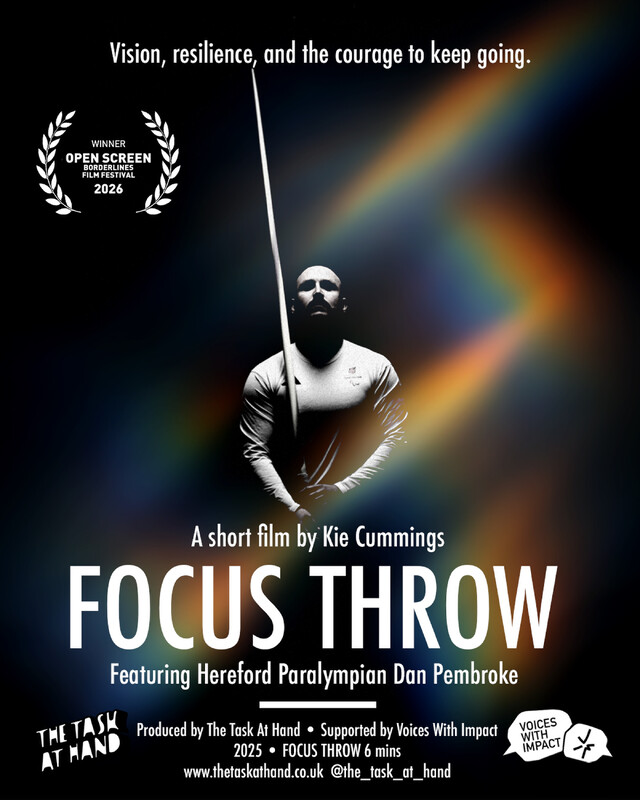
A javelin received in childhood becomes the thread running through a life. In FOCUS THROW, Dan Pembroke retraces his relationship with throwing, from his beginnings to Paralympic sport, while describing a condition that changes how he inhabits the world. Retinitis Pigmentosa, presented in his testimony as progressive sight loss, enters both his sporting story and his questions about the future.
Written and directed by Kie Cummings, the British documentary takes its audience between the track, memories and everyday spaces. Home movies and sporting archive footage accompany the protagonist’s voice; work on the field brings the story back to physical preparation and the repetition of the throwing action. The javelin moves through these places as a familiar object, connected to ambition as well as memory.
The journey also includes an interruption: an injury takes Pembroke away from the Olympic path. Returning to the javelin and discovering Paralympic sport open a new phase, with changing goals and possibilities. Preparing for a major competition coexists with uncertainty about what he will still be able to see and the need to give his experience a direction.
Alongside testimony filmed against a black background, Cummings places images shaped around light. The opening’s luminous rings, backlighting, optical filters and blurred focus bring a changing perception of space into the story. The track alternates with details of the body and wider views: the film connects what Pembroke describes with the way the world appears on screen.
Alongside the athlete are his relationship, home and garden. These passages extend the portrait beyond training: sight loss concerns relationships, independence and personal plans. The wish to keep competing remains part of this everyday life, together with vulnerabilities that do not end with a sporting result.
Made by The Task At Hand with support from Voices With Impact, the short belongs to a project dedicated to telling stories about mental health through cinema. In six minutes, FOCUS THROW invites audiences to meet the person preparing to throw, the memories he carries and the questions accompanying each new goal.
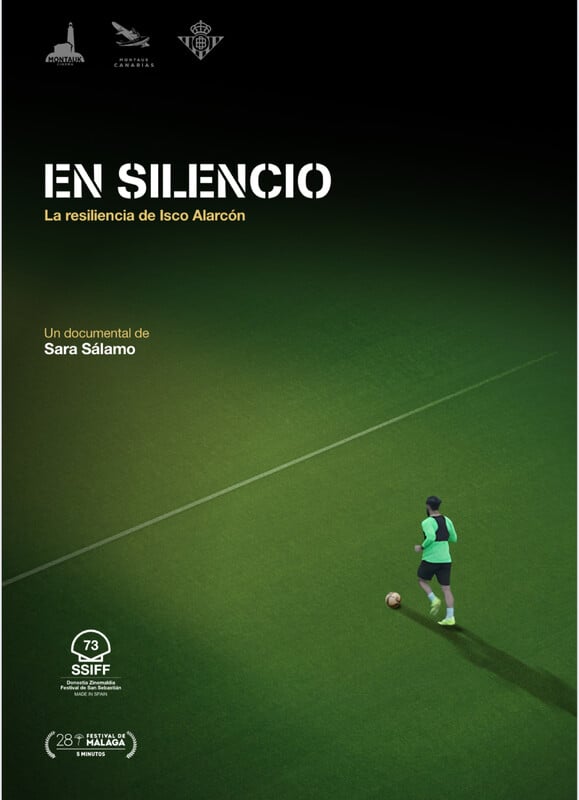
While recovering from a serious injury, Isco Alarcón moves between medical appointments, training and family life. Sara Sálamo follows the time of rehabilitation and the relationship between private vulnerability, public expectations and the desire to return to the pitch.
A young wrestler dreams of a college scholarship, but the pressure to make weight enters his private life. Shawn Deninger’s Babyface explores sporting ambition, body image and the difficulty of asking for help.
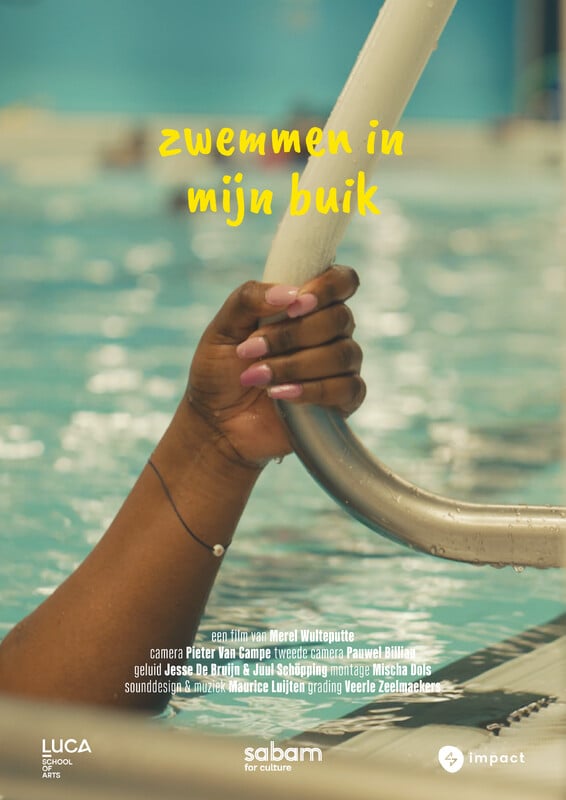
Danielle learns to swim so she can share the water with her children. Merel Wulteputte’s documentary brings together pool lessons, family life and memory, following a process of learning to trust her body.